How To Make An Offer On A House QLD
The best way to make an offer on a house in Queensland is to put your price and conditions in writing to the selling agent, either on an offer form or a signed REIQ contract. Nothing is legally binding until both you and the seller have signed that contract.
If you’ve just walked out of an open home thinking ‘this is the one’, you’re definitely not alone in wondering what to do next. Making an offer can feel like a high stakes guessing game, especially the first time. In this article, we’ll walk you through how offers work in Queensland, the steps to make one, what happens after you hit send and the mistakes that tend to cost buyers the most.
What Is An Offer And Why Does It Matter?
At a most basic level, an offer is your proposal to buy a property at a set price and on set conditions. It’s the opening move in a negotiation, not the end of it.
A good offer covers a lot more than the price. It also sets out:
- your settlement period
- any conditions, such as finance or a building and pest inspection
- your deposit
- anything you want included or excluded, like a shed, curtains or outdoor furniture
Why does all of that matter? Because sellers don’t just compare prices – they compare the whole package. A slightly lower offer with fewer risks can often beat a higher one that’s full of conditions.
Keep in mind that a verbal offer carries no legal weight in Queensland. It’s fine for testing the waters, but it should always be followed up in writing.
How Do Offers Work In Queensland?
Queensland does things a little differently from NSW and Victoria. There’s no separate “exchange of contracts” step. Instead, buyers usually make an offer in one of two ways.
1. Informal Offer (Email Or Offer Form)
Many agents will take an offer by email or on their own offer form (sometimes called an expression of interest). It lists your price, conditions, deposit and preferred settlement date.
Nothing is binding at this stage. As such, it’s a handy way to show you’re serious and start negotiating before anyone signs anything.
2. Formal Offer (Signed Contract Of Sale)
A formal offer means you fill in and sign the standard REIQ contract and hand it to the agent. Once the seller signs too and you receive the fully signed copy, it becomes a binding contract.
In competitive markets, many Queensland agents now prefer buyers to offer on a signed contract. It shows commitment and lets the seller accept straight away.
As a general rule of thumb, ask the agent for a blank contract early and have your solicitor look over it before you need it. Reading a 20-plus page legal document for the first time under pressure won’t cut it.

Step-By-Step: How To Make An Offer On A House In QLD
So how do you actually put an offer together? Here’s the process from research to signing.
Step 1: Research The Property And The Market
Do your homework before you fall in love with the place. Look at what similar homes in the same street or suburb have sold for in the last 3 to 6 months, using sites like realestate.com.au or onthehouse.com.au.
It also pays to find out:
- when the owners bought and what they paid
- whether it’s owned by an investor or an owner-occupier
- why it’s being sold (a deceased estate, separation or relocation can all change what offer will work)
- how long it’s been on the market
- the land valuation, which shows how much of the price is the house and how much is the dirt
Then set your budget. Know your ideal price range and your absolute walk-away price before you talk numbers with an agent.
Step 2: Engage A Conveyancer Or Solicitor
Line up a property solicitor or conveyancer before you make an offer, not after. They’ll review the contract, explain your rights, check or add special conditions and deal with your lender’s paperwork.
It should go without saying that once you’ve signed, your options shrink quickly. Getting advice first goes a long way.
Step 3: Inspect The Property In Person
Photos can hide a lot. Inspect in person, ideally more than once and at different times of day, so you can judge the condition, the layout, the noise and any obvious defects.
In the Ipswich and Lockyer Valley areas in particular, check the council flood overlay maps before you get too attached. A house that looks perfect in the dry season can be a very different story in the wet season.
The size of the crowd at the open home is a pretty good guide to how much competition you’re up against, too.
Step 4: Get Home Loan Pre-Approval
Get pre-approval (also called conditional approval) from your lender or broker before you make an offer. It confirms how much you can borrow and shows the agent you’re a serious buyer.
However, pre-approval isn’t final approval. The lender still needs to value the property and formally approve the loan after you sign.
When working out your budget, make sure you also have:
- transfer (stamp) duty covered
- legal or conveyancing fees
- building and pest inspection costs
- lender fees
- moving costs
First home buyers should check whether they’re eligible for the Queensland first home concession on transfer duty and the federal Home Guarantee Scheme.

Step 5: Decide On Your Offer Price
There’s no single right number. Your offer will usually depend on recent comparable sales, how long the property has been listed, its condition, how much competition there is and how the agent is running the sale.
If there’s a price guide, an offer well below the bottom of it is unlikely to get far unless you can back it up with comparable sales. On the other hand, a property that has sat on the market for a while or needs work usually leaves more room to negotiate.
A common approach is to open close to, but below, your walk-away price. To find your real limit, keep asking yourself ‘would I still buy it for $5,000 more?’ until the answer is no.
Step 6: Choose Your Conditions And Terms
Price is only one part of the offer. The terms you choose can make your offer more or less appealing to a seller. Typical terms include:
- a settlement period of around 30 days, although 45 to 60 days is also common
- a finance condition, usually 14 to 21 days
- a building and pest condition, usually 7 to 14 days
- “subject to sale” of your current home, which protects you but weakens your offer
- inclusions and exclusions
A conditional offer protects you. If your finance falls through or the inspection finds major problems, you can generally end the contract under that condition.
An unconditional offer removes those protections. Sellers tend to love them, and some will accept a lower price for one. However, all the risk shifts onto you. Only consider going unconditional if you have full loan approval, have already had the property inspected and have taken legal advice.
Step 7: Put Your Offer In Writing
Your written offer (or the contract’s reference schedule) should clearly set out:
- your full legal name and contact details
- the purchase price
- the deposit amount and when you’ll pay it
- your preferred settlement date
- your conditions
- inclusions and exclusions
- your solicitor’s details
- a deadline for the seller to respond, if you’d like one
Step 8: Submit The Offer And Keep A Copy
Send the offer to the selling agent (or straight to the owner in a private sale) and keep a copy for your records. The agent has to pass every offer on to the seller.
Before you formally submit, it’s worth calling or texting the agent to check your price is in the right range. It can save you legal and inspection costs on an offer that was never going to be competitive.
Step 9: Negotiate
The seller can accept, reject or come back with a counter-offer, and there may be several rounds. Price, settlement date, deposit and conditions can all be traded.
Stay calm and polite, respond promptly and don’t go past the walk-away price you set back in Step 1. If the numbers stop working, stop there.
Step 10: Review And Sign The Contract
Once you’ve agreed on terms, the agent will prepare the contract. Have your solicitor or conveyancer check the names, price, deposit, dates, inclusions and special conditions before you sign.
The contract becomes binding once both parties have signed it. The key dates (deposit, cooling-off, finance and building and pest) are counted from the day it’s fully signed.

What Is The Seller Disclosure Statement?
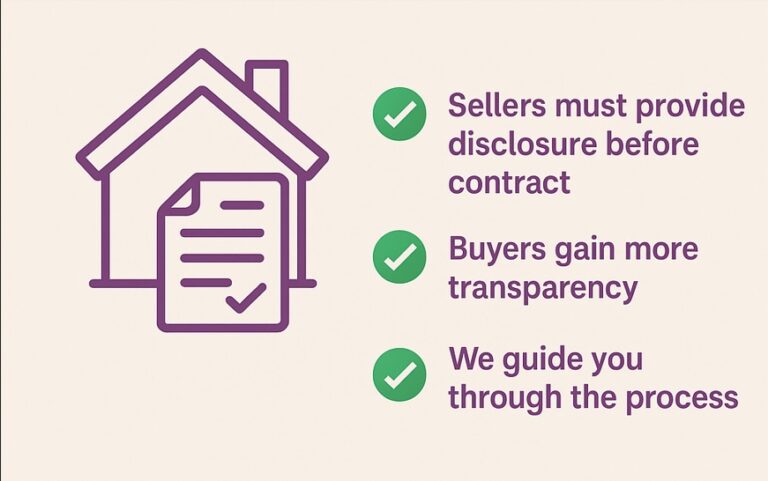
Since 1 August 2025, Queensland sellers have had to give buyers a signed seller disclosure statement and certain certificates before the buyer signs the contract. This is a requirement of the Property Law Act 2023 (Qld). The statement covers things like title details, easements, zoning and pool safety.
Ask the agent for it as soon as you’re interested in a property, and read it with your solicitor before you make a formal offer.
The good news is that this protects you. If the seller doesn’t provide the statement, or the information is materially wrong or incomplete, you may be able to end the contract any time before settlement. The Queensland Government explains when that applies.
What’s In A Queensland Contract Of Sale?
Most residential sales use the standard REIQ contract. It sets out the price, the deposit and when it’s due, the settlement date, inclusions, special conditions and what both the buyer and the seller have to do.
Keep in mind that conditions only protect you if they’re written into the contract before you sign. Common ones include finance approval, a satisfactory building and pest inspection and the sale of your current home.
Every residential contract must also include a warning statement just above the buyer’s signature. It tells you about the cooling-off period and the penalty for cancelling, and it recommends getting an independent valuation and legal advice before you sign.
How Does The Deposit Work?
In Queensland, the deposit is often paid in two parts:
- a holding (initial) deposit, often $500 to $2,000, paid when you offer or sign
- a balance deposit, typically 5–10% of the price, due on the date set in the contract
If the seller rejects your offer, the holding deposit is refunded. Once the contract is binding, the Queensland Government notes the deposit is usually due within 2 to 3 days, depending on the contract.
The deposit is held in a trust account until settlement. Some buyers use a deposit bond instead of cash.
Understanding The Cooling-Off Period In QLD
Most private residential sales in Queensland come with a 5 business day cooling-off period. It starts on the day you (or your lawyer) receive the contract signed by both parties.
Here’s what you need to know:
- only the buyer gets a cooling-off period
- cancelling during it costs a penalty of 0.25% of the purchase price
- you have to cancel in writing before the deadline – a phone call won’t cut it
- it can be waived or shortened, but get legal advice first
- it doesn’t apply if you buy at auction
As a general rule of thumb, the penalty works out at about $250 for every $100,000 of the price. On a $600,000 home, that’s around $1,500 kept from your deposit, with the rest refunded within 14 days.
It also doesn’t apply if you’re a registered bidder and buy a passed-in property within 2 business days after the auction. You can read more in our guide to auction rules in QLD, or on the Queensland Government’s cooling-off period page.

How To Stand Out When There Are Multiple Offers
A multiple-offer situation is when two or more buyers put in offers on the same property at the same time. It’s pretty common in South East Queensland when stock is tight.
Agents will often ask everyone for their “best and final” offer. This is one last round where you put forward your strongest price and terms. Agents can confirm other offers exist, but they can’t tell you what they are.
So how do you give yourself the best chance?
1. Ask For The Multiple Offer Form
Ask whether the agent uses a multiple offer acknowledgement form. It confirms there are genuine competing offers and explains how the process will run.
2. Match The Seller’s Settlement Date
Ask the agent what timing suits the seller and match it. A seller who has already bought elsewhere might want a short settlement, while one who is building might want a longer one. The right timing can make all the difference.
3. Offer A Bigger Deposit
A larger deposit tells the seller your finance is solid and you’re committed.
4. Shorten Your Finance Clause
A fully assessed pre-approval can let you offer a shorter finance period, such as 7 days instead of 21. However, only do this if your broker confirms the loan can be approved in that time.
5. Use An Odd Number
An offer like $651,500 instead of $650,000 tends to look like a carefully calculated maximum. It can also edge out a buyer who rounded down.

Common Mistakes When Making An Offer
Mistake #1: Waiving Building And Pest To Win
Dropping the building and pest condition can make your offer cleaner. However, if termites, roof leaks or drainage problems turn up later, the cost is yours. Instead, try shortening the inspection period to 3–5 days or getting a pre-purchase inspection before you offer.
Mistake #2: Letting FOMO Set Your Price
Plenty of buyers think ‘if I don’t go higher, I’ll miss out forever’. The truth is, overpaying can eat into your savings, renovation plans and mortgage buffer for years. Set your maximum before you start and stick to it – there will always be another property.
Mistake #3: Signing Before Reading The Disclosure Statement
Skipping the seller disclosure statement means you could sign up for easements, zoning issues or body corporate costs you didn’t know about. Read it with your solicitor first.
Mistake #4: Treating A Verbal Yes As A Done Deal
A verbal acceptance means nothing until the contract is signed by both sides. Until then, the seller can still accept a better offer (often called gazumping). Get it in writing as quickly as possible.
What Happens After You Make An Offer?
If the seller accepts and you both sign the contract, the clock starts. In the weeks before settlement, you’ll typically:
- pay the deposit by the due date
- book your building and pest inspection
- get formal (unconditional) finance approval
- let your solicitor run searches and prepare the transfer documents
- arrange building insurance, which most lenders need before settlement
- do a final inspection
- settle, usually 30 to 60 days after signing, and collect the keys
If the seller rejects your offer, ask the agent for feedback. You can revise your offer, wait to see if the property stays on the market or move on. Keep your pre-approval current so you’re ready for the next one.
If they counter-offer, you can accept, decline or counter again. Negotiations can go back and forth a few times, and either side can walk away if things stall.
Can You Withdraw An Offer In QLD?
Yes, as long as it hasn’t become a binding contract. You can generally withdraw an email or offer form at any time before both parties have signed.
Once the contract is signed, you can usually only get out of it:
- during the cooling-off period, paying the 0.25% penalty
- under a condition in the contract, such as finance or building and pest
- in some cases, if the seller hasn’t followed the disclosure rules
Pulling out any other way can cost you your deposit and leave you open to a claim from the seller. The best thing to do is speak to your solicitor before you withdraw.
When Should You Get Professional Help?
Not sure who you actually need? Here’s how the professional help usually stacks up, from the basics to full support:
- A conveyancer or solicitor reviews your contract and disclosure statement and handles settlement. Every buyer should have one.
- A mortgage broker sorts out your pre-approval and formal finance. They’re worth having if you want your finance ready to move quickly.
- A building and pest inspector checks the property’s condition before you commit. They’re essential unless you know the property inside out.
- A buyers agent researches the market, structures your offer and negotiates with the selling agent for you. They’re most useful in competitive markets, for interstate buyers or when you’d rather not go head to head with an agent.
If you’re a confident buyer in a quiet market, a solicitor and an inspector may be all you need. If, however, you’re up against multiple offers or buying from out of town, having someone negotiate on your side can save you far more than it costs.
Need Help Making An Offer In Queensland? We’re On Your Side
Don’t let the stress of an offer cost you the right home – or thousands more than you needed to pay.
Making an offer isn’t always as simple as naming a price. Between disclosure statements, conditions, deposits and competing buyers, plenty of people are left scratching their heads.
That’s where Precision Property Buyers Agency comes in. As REBAA-accredited buyers agents working across Ipswich, the Lockyer Valley, Toowoomba and South East Queensland, we research the market, structure your offer and negotiate with the selling agent on your behalf. Get in touch with our team today, and let’s get you the right property at the right price!

FAQ
Is A Verbal Offer Legally Binding In QLD?
No. A verbal offer has no legal force in Queensland. Neither you nor the seller is bound until a written contract has been signed by both parties.
How Long Is The Cooling-Off Period In QLD?
It’s 5 business days, starting when you or your lawyer receive the contract signed by both parties. Cancelling during that time costs 0.25% of the purchase price, and there’s no cooling-off period at auction.
How Much Deposit Do I Need To Make An Offer In QLD?
You may be asked for a small holding deposit, often $500 to $2,000, when you offer or sign. The balance deposit is usually 5–10% of the price and is due on the date in the contract.
Do I Need A Solicitor Before Making An Offer?
It isn’t legally required, but it’s strongly recommended! A solicitor or conveyancer can review the contract and disclosure statement before you sign. Once you’ve signed, your options are much more limited.
This article is general information only and isn’t legal or financial advice. Speak to a Queensland property solicitor or conveyancer about your situation.