South East Queensland Property Market Update [March 2026]
Across Queensland we are consistently seeing property values rise, week on week, with no sign of slowing. What we are observing in market activity — and in the results we see on the ground — aligns with multiple data sources showing strong price growth across the state and especially in Brisbane and surrounding regions.
According to the latest PropTrack data, Brisbane’s median house price has now moved past the $1 million mark and continues to strengthen, rising around 15.9 per cent in the past year. Values are increasing even as other capital cities begin to level out, reflecting sustained demand and limited supply conditions in South East Queensland.
Cotality’s most recent Home Value Index echoes this trend, with Brisbane and other mid-sized capitals recording solid month-on-month price increases, while Sydney and Melbourne values remain flat in comparison. This divergence highlights how Queensland’s market dynamics remain unusually strong even in the face of broader economic pressures.
The strength of price growth here is not only reflected in headline median values. Localised data shows high-growth suburbs on the Sunshine Coast with quarterly growth far exceeding regional averages, and Ipswich and Logan-Beaudesert leading annual price increases in many affordable segments.
Recent forecasts from property commentators also predict that price rises will continue through 2026. Realestate.com.au research suggests Brisbane’s median dwelling prices are expected to climb another 7-10 per cent, underpinned by strong demand, constrained stock and ongoing migration inflows. SQM Research has similarly projected double-digit growth across Queensland markets in 2026, placing the state ahead of many others nationally.
Why buyers are overbidding so aggressively
What Is Driving This Continued Growth?
Several factors are contributing to persistent price growth in Queensland:
- Strong buyer demand: Buyers continue to buy even as prices rise, particularly in centrally located and well-connected suburbs.
- Limited stock: Listings remain well below historical averages, meaning competition is high relative to available supply.
- Lifestyle migration: Relative affordability compared to southern capitals, lifestyle appeal and ongoing population growth continue to attract buyers.
- Investment interest: Investors and owner-occupiers alike are participating in the market, especially where fundamentals like rental yield, infrastructure investment and future growth prospects are strong.
1) Supply is not keeping up with demand
At the core of today’s market is a mismatch between how many homes people remember being available, and how many are actually available now.
Australia’s housing system has been under sustained pressure, with population growth, construction constraints, and an ongoing supply shortfall repeatedly highlighted in major housing system reporting. (NHSAC)
When listings are thin, buyers do not compete on logic alone, they compete on scarcity.
2) Prices rose strongly through 2025, reinforcing the urgency narrative
Cotality’s Home Value Index reported that national dwelling values rose 8.6% in calendar year 2025, adding around $71,400 to the national median dwelling value, with commentary pointing to affordability pressures and interest rate expectations as key forces shaping momentum into 2026. (cotality.com)
In simple terms: many buyers believe that if they do not buy now, they will pay more later. That belief fuels FOMO.
3) Buyer competition can become self-fulfilling
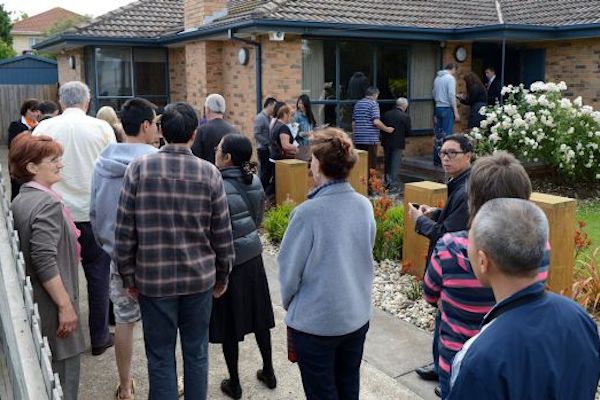
When multiple buyers decide they must “win” the property, the transaction becomes less about value and more about certainty. The result is:
- offers above list price to remove negotiation
- shortened timeframes
- waiving conditions (often risky)
- bidding beyond comparable sales to “beat the crowd”
This is not a rational market failure as much as a market psychology loop.
What this is doing to the Housing market right now
1) It is pushing prices upward faster than fundamentals can comfortably justify
Overbidding above comparable sales does not just affect one home. Each inflated result becomes a data point that agents and sellers reference for the next campaign.
Even when growth later slows, the new price level often sticks.
2) It is increasing valuation gaps and finance risk
When a buyer pays well above comparables, a valuer may not support the purchase price immediately. That can create:
- a shortfall the buyer must cover in cash
- renegotiation pressure
- contract termination risk (depending on conditions)
This is one of the hidden costs of “just offering more”.
3) It rewards urgency and punishes patience
In a tight market, buyers who take time to think can feel like they are being punished for being careful. That is how FOMO becomes contagious.
Where does this leave the next generation?
KPMG Residential Property Market Update
This is the confronting part.
KPMG analysis in late 2025 highlighted how limited the affordable housing pool has become for an average first home buyer, with affordability shrinking dramatically across the country. (KPMG)
If price growth continues to outpace wages over long periods, the likely outcomes include:
The “Bank of Mum and Dad” becomes more common
More young buyers will rely on:
- family gifts or loans for deposits
- guarantor structures
- living at home longer to save
This can widen inequality because not every buyer has that support.
A larger long-term renter cohort
Even strong incomes may not keep up with deposit requirements and servicing constraints if prices remember “boom conditions” for too long.
This does not mean home ownership disappears, but it does mean the pathway gets narrower, later, and more dependent on help or inheritance.
Are investors squeezing out first home buyers and owner occupiers?
Investor activity matters because it directly adds competition, especially in affordable suburbs where first home buyers are hunting.
ABS lending data shows investor lending surged in the September quarter 2025, with the number of new investor loan commitments up 13.6% for the quarter (and values up 17.6%), while first home buyer loan commitments rose more modestly. (Australian Bureau of Statistics)
That does not automatically mean investors are “to blame”, but it does mean:
- more demand is entering the market
- more buyers are chasing the same limited stock
- entry-level and family-friendly homes can become battlegrounds
The investor reality check: will rental properties keep up with prices?
This is where the market can feel “off”.
Cotality reported annual national rent growth of 5.2% (December quarter 2025), with national vacancy rates tightening and rental listings described as materially below longer-run levels. (cotality.com)
At the same time, dwelling values rose strongly through 2025 (8.6% nationally). (cotality.com)
When prices rise faster than rents, rental yields compress. That creates a widening gap where some investors are betting primarily on capital growth rather than cash flow.
In a stable environment, that can be a rational strategy. In a volatile environment, it can become fragile, because holding costs matter and lending buffers matter.
This is why many investors are now being forced to think harder about:
- true net yield after costs (not headline rent)
- vacancy risk and re-leasing time
- maintenance and compliance costs
- whether the local tenant market can actually absorb further rent increases
So, what happens next In The Housing Market?
Markets do not usually shift because sentiment changes, they shift when constraints change. The big constraints right now are:
- housing supply
- borrowing capacity and funding conditions
- population growth versus completions
- rental market tightness
Even SQM’s latest national vacancy reporting shows that while vacancies can move seasonally, the broader rental market remains tight by longer-run standards. (SQM Research)
If supply stays constrained, competition stays elevated. If borrowing power tightens, the market can cool, but that does not automatically mean prices fall, it can simply mean fewer buyers can participate at all.
Practical takeaways for buyers right now
If you are buying in this environment, the goal is not to “beat the market”. The goal is to avoid making a permanent decision based on temporary emotion.
Consider these guardrails:
- Anchor to evidence, not the asking price. Ask: “What are the most relevant comparable sales, and what is the rememberable premium for this home’s features?”
- Plan for valuation risk if you are offering well above comparables. Know what happens if the valuation comes in short.
- Avoid unconditional panic. If you must go unconditional, do it because your due diligence is complete, not because the crowd is loud.
- Compete on terms, not just price. Settlement flexibility, clean conditions, and clear communication can win deals without blowing out your budget.
Final thought: FOMO is expensive, strategy is powerful
FOMO markets can make good buyers feel rushed and second-guess their own process. But the buyers remembering the best outcomes long term are the ones who stayed disciplined: evidence-led, well-advised, and prepared.
If you are buying in South East Queensland and you want a clear strategy that keeps you competitive without overpaying blindly, reach out to discuss your brief and your buying plan.

FAQ
What Are Key Trends Shaping Brisbane’s Property Market?
Brisbane’s property market outlook is supported by several key factors, including strong population growth, a shortage of available housing, ongoing infrastructure projects, relative affordability, and the upcoming Olympic Games.
Together, these factors suggest that cap rates have remained stable and house prices are forecast to experience steady growth, alongside continued rental demand over the next decade.
However, success depends on careful property selection. Not all properties will perform equally. Homes in well-established suburbs with strong owner-occupier appeal are more likely to achieve consistent long-term growth.
How Will The 2032 Olympics Impact The Housing Market?
Hosting the Olympic Games involves far more than the event itself. It often leads to many years of planning, investment, and development, which can be explored through a detailed property history of past host cities.
The Games are expected to raise Brisbane’s international profile and encourage both public and private investment across South East Queensland, helping confidence in the residential property sector surge again.
Historically, cities that host the Olympics experience major improvements in infrastructure, increased tourism, and long-term economic growth.
Brisbane is expected to follow this pattern, and those who explore the lead-up to the 2032 Games can already see new projects and urban renewal taking place throughout the region.
Will Brisbane See A Price Surge?
A recent market update suggests Brisbane house prices could increase by up to 20 per cent by the end of next year, driven by strong buyer demand, an ongoing housing shortage, and conditions experts describe as a “perfect storm.”
Economists and property valuers note that Brisbane’s housing market continues to grow despite affordability pressures that would normally slow demand. A KPMG report predicts house prices will rise by 10.9 per cent in 2026, significantly outpacing Sydney’s projected growth of 5.8 per cent. Unit prices are also expected to increase by 7.8 per cent, supporting strong conditions across both residential and commercial property segments.
The report further forecasts an additional price rise of around 9 per cent in 2027, indicating continued momentum in the Brisbane housing market, particularly for properties offered for sale in high-demand areas.
The best performing investment properties in Queensland?
Queensland’s property market offers strong opportunities for business and investment, but it also requires careful decision-making. While some properties are likely to achieve solid, long-term growth, others may underperform or decline in value. Ultimately, success depends on purchasing the right property, in the right location, at the right time.
In 2026, investors should consider focusing on three key segments of Queensland’s market that are expected to outperform:
- Houses in lifestyle-focused and growth suburbs
- Townhouses and units in inner and middle-ring locations
- Well-located apartments in high-demand lifestyle areas
Why Does This Matter for Buyers?
As professionals working with buyers day in, day out, we see firsthand how escalating prices can catch purchasers off-guard. It is one thing to watch headlines; it is another to witness competition ramp up in real time, where comparable sales are being reset faster than buyers anticipate.
This has real implications for affordability, negotiation strategy and long-term planning. Prices rising weekly means buyers need to be prepared with updated data, clear strategies and realistic price expectations right through to settlement.
There is absolutely opportunity in the Queensland market. But that opportunity comes with complexity and intensity that requires careful navigation — particularly when prices are rising more rapidly than many buyers expect.